TechCongress’ Congressional Innovation Fellowship places technologists in Congress as technology policy advisors. In January, we placed 15 Congressional Innovation Fellows in Congressional Offices and Committees, where they’re helping legislate emerging technologies, export controls, and a host of other issues.
Each year, we spend the summer months reviewing applications from many promising candidates. Since 2015, we’ve placed nearly 140 technologists in Congress. We’re proud of the outsized impact our fellows have had, and look forward to seeing more candidates join their ranks each year.
Emerging technologies and debates around their regulation raise questions around what it means to be a technologist. We strive for cohorts representative of a range of experiences, backgrounds and skills that correspond to current needs in technology policy. In this essay, TechCongress Senior Outreach & Program Manager Aleena Khan shares four lessons from eleven years of fellowship operations that shed light on our recruitment and selection processes, and the criteria we look for.
Here is a snapshot of what we learned.

Photo caption: 2026 Congressional Innovation Fellows Alexander Koch (L) and Evan Straka (R) pictured during TechCongress’ Fellow Orientation in January.
Sincerity matters: One of our biggest learnings for recruitment is to lead with sincerity. Congress, and tech policy as a whole, is a hard space to break into without policy experience or connections. We want this fellowship to fundamentally change the arc of someone’s career and give people the opportunity to determine if policy is the right space for them. Our fellowship is designed to be an educational experience; we want to provide people with, essentially, a master’s in Congress.
Many of our fellows come into the fellowship without any government experience, and that often causes people to think, “since I haven’t worked in policy before, or I don’t know about how exactly the government runs, that means I can’t apply.” However, we’ve seen that that gives many of our fellows an advantage. They bring unique problem solving skills, entrepreneurialism, and creativity to the role. We’ve consistently, throughout the past few recruitment cycles, tried to name that imposter syndrome exists and influences people’s decision to apply. Beyond just acknowledging it, we’ve also tried to combat it and encourage people to apply by highlighting our fellows’ backgrounds. We hope that, by seeing themselves in our fellows, prospective candidates will overcome any trepidation they might have about applying.
What is considered “technical” evolves, and we must respond to ensure needs are being served: During the first few years of TechCongress, it was pretty easy to define who was technical. We just looked for people with STEM degrees or experience. As tech policy started to evolve and impact other areas such as housing, healthcare, and public health, we realized that we needed to expand our definition of a “technologist”. We’ve welcomed fellows who were journalists, geneticists, public health researchers, and economists who have incredible experience. In 2025, we welcomed our first climate tech fellow, Shourya Jain. Following the success of these fellows, in 2026 we piloted four new verticals to welcome applicants who have experience in emerging or critical issues that Congress is encountering: climate, digital service delivery, space, and criminal justice. Beyond looking for people with just technical skills, we also looked for people who had program, implementation, legal, scientific, or development experience.
Opening up the fellowship for people from less traditional “tech” backgrounds has been an incredible learning experience for TechCongress. We found that offices and committees in Congress were eager to receive people with unique blends of experiences. We connected with people doing transformative work who are passionate about improving the institution’s ability to legislate on these issues.
Following the success of our verticals, for our 2027 cohort we’re aiming to recruit at least two fellows who fit within the following verticals:
Climate and energy, such as climate infrastructure and permitting, energy transmission, grid modernization, battery power and charging, clean energy, and NEPA reform.
Government innovation, such as government tech and digital benefits (Medicaid, SNAP, FAFSA, Direct File, etc.) delivery, civil service reform and hiring, Paperwork Reduction Act, Privacy Act, Administrative Procedure Act, and modernization.
Science, research, and innovation, which deals with improving how science is funded, conducted, evaluated, and translated into practice. This also includes federal research processes and institutions (NSF, NIH, DOE, federal labs), clinical trials, and FDA reform.
Applicants deserve transparency: Unsurprisingly, we’ve found that our applicants value transparency during the selections process. If they’re taking the time and effort to apply, the least we can do is respond in kind. We take a few steps to ensure that we are being transparent. We provide an interview guide for each round of interviews, we let people know how many people are being interviewed for each round, and we notify people before we check references. While we’ve received positive feedback, we realize there’s more we can do for all our applicants, not just the ones who advance. This year, we want to provide regular updates to applicants and publicize our selection timeline to provide greater transparency.
Banning the use of Generative AI and LLMs won’t discourage people from using it: GenAI can help with brainstorming and editing application essays, particularly the policy memo, but it is noticeable when people use it to help answer personal questions or write large parts of their essays. While we don’t discourage applicants from using GenAI tools, we want them to consider that everybody has access to the same LLMs, which draw from the same sources of information. An application is an opportunity for us to get to know you. We want to know what drives you to work in Congress, what issues you’re passionate about, and how you want to use this experience to grow your career. Overusing an LLM in an application prevents us from truly understanding who you are and making an accurate determination about your potential to be a fellow.
We hope these learnings will guide applicants as they prepare their applications for our 2027 Congressional Innovation Fellowship. Whether you’re new to TechCongress or have submitted an application for a prior cycle, we encourage all interested candidates with hands-on experience in technology or its adjacencies to apply.
To learn more, visit our 2027 application page and submit your application by June 25. Subscribe to our newsletter and follow TechCongress on LinkedIn, X and Bluesky for the latest updates from the Congressional Innovation Fellowship.
This piece was authored by TechCongress Senior Outreach & Program Manager, Aleena Khan
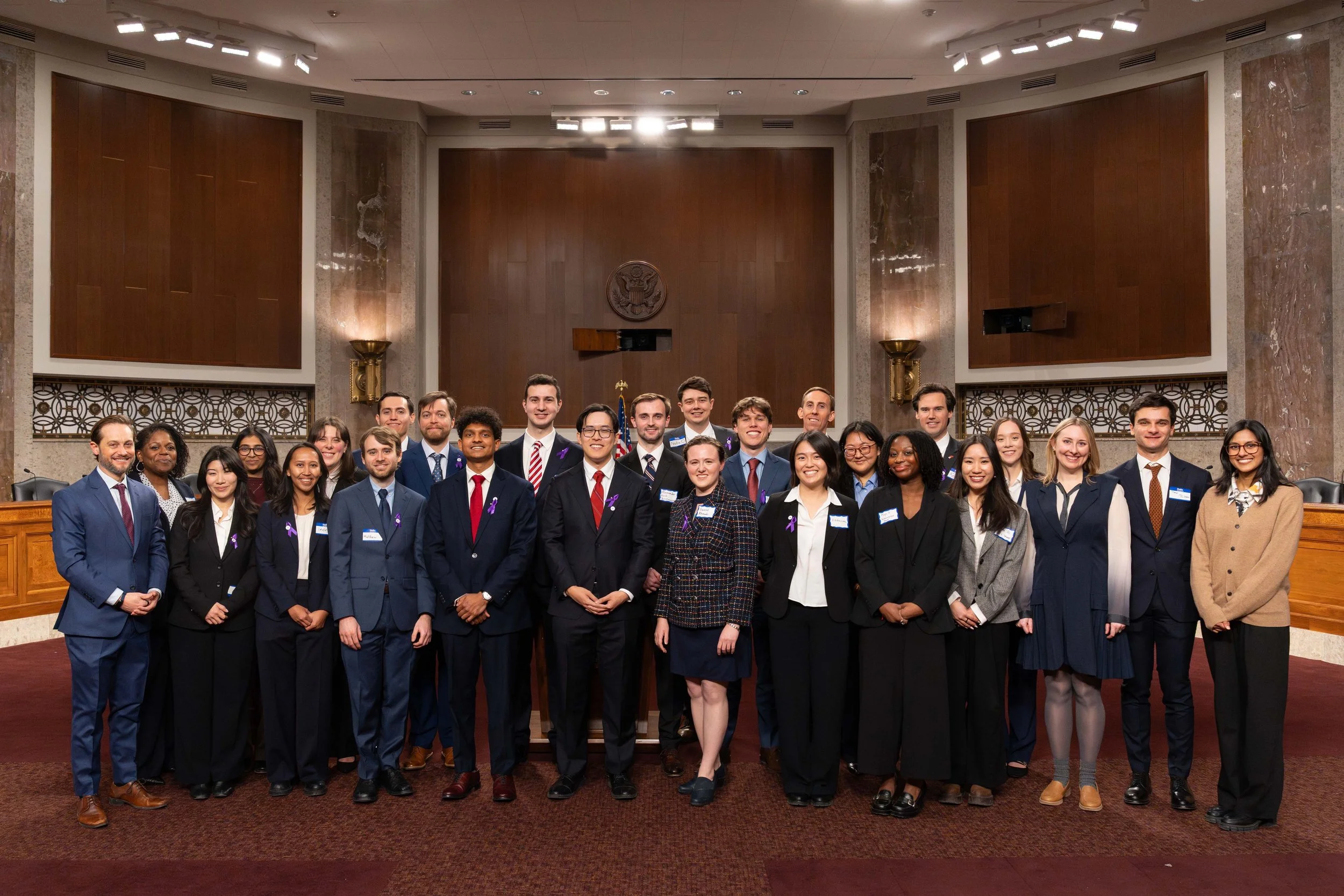
Photo caption: TechCongress and Horizon Fellows pictured during our Launch Event on Capitol Hill.
TechCongress places technologists into the U.S. Congress through the Congressional Innovation Fellowship. Our fellows serve as technology advisors to Members of Congress and Committees, helping the legislative branch make better-informed decisions on the policy issues shaping the future of technology. By building a durable pipeline of technical talent on Capitol Hill, we work to ensure that Congress has the talent it needs to build a critical mass of technology expertise.